
“Under-eye bags are caused by herniated orbital fat — fat that has prolapsed forward through a weakened orbital septum. No eye cream, no filler sequence, no radiofrequency device can permanently address this. Transconjunctival lower blepharoplasty removes or repositions the fat through an incision hidden inside the lower eyelid. There is no external scar. The bags are gone. It is, in my view, one of the most elegant procedures in all of facial plastic surgery.”
What lower blepharoplasty
can do for you
Lower blepharoplasty corrects the herniated fat pads that create under-eye bags and the hollows beneath them. The result is a smoother, brighter under-eye that reflects how rested you actually feel.
- Under-eye bags permanently gone — herniated fat is repositioned or removed — once corrected, the bags do not return.
- No external scar — incision placed inside the lower lid (transconjunctival) so the skin surface is untouched.
- Makeup looks great (if you even want to wear it at all) — the structural cause is gone, so makeup finally sits flat and even — and most patients find they reach for it far less often.
- Smooth transition to the cheek — the abrupt bag-to-cheek step is flattened into a single rested curve.
- You stop looking tired in photos — the under-eye area finally reads the way you feel on a good night of sleep.

Ready to discuss your lower blepharoplasty goals?
Understanding the lower blepharoplasty
What the lower blepharoplasty is
Lower blepharoplasty corrects the herniated fat pads that create under-eye bags, as well as the hollows that can sit beneath them. The result is a smoother, brighter under-eye that reflects how rested you actually feel.
Who the lower blepharoplasty is for
If any of the following describes you, the lower blepharoplasty may be worth exploring:
What makes Dr. Truesdale’s approach different
Dr. Truesdale’s approach to every procedure reflects a consistent set of principles — the same standards that inform every consultation, every surgical plan, and every post-operative follow-up.
Restraint, Not Over-Correction
The most over-done procedures in facial aesthetics are over-done because someone kept going past the right stopping point. Dr. Truesdale's rule: when the result is right, stop — even if more could technically be done. For lower blepharoplasty, that means correcting fat herniation without over-resection — preserving lower-lid support and avoiding the hollow that comes from aggressive surgery.
The Artist's Eye
Before becoming a surgeon, Dr. Truesdale was a trained portrait artist. That lens shapes every decision — proportion, light, shadow, the relationship between every feature — in a way purely clinical training alone does not. For the lower lid, that lens informs the transition from lid to cheek so the under-eye reads as one continuous, rested curve.
Personal, Start to Finish
Every consultation, every surgical plan, every procedure — performed personally by Dr. Truesdale. No delegation to coordinators, PAs, or residents. Dr. Truesdale is personally involved every step of the way. Every lower-bleph incision is placed and the contour judged by Dr. Truesdale at the operating table — never delegated.
Natural Is Non-Negotiable
The only acceptable outcome is one that no one can identify as a procedure — a result that reads as a better version of you. No pulled look, no frozen expression, no obvious work. The lower-bleph goal: under-eye smoothness, not a sunken or pulled appearance.
“The under-eye should never be pulled tight or hollowed out. Conservative is always right.”
— Dr. Carl Truesdale, MD
Lower blepharoplasty before & afters
Real lower blepharoplasty patients of Dr. Truesdale. Under-eye correction is performed through a hidden incision so there is no visible scar.


Your transformation starts with a conversation.
From first consultation to final reveal
We always tell our patients to ‘trust the process.’ You are in good hands on every step of the journey to your unique masterpiece.
Consultation
Personal session with Dr. Truesdale — facial analysis, honest assessment of candidacy, and a clear plan for what the procedure can and cannot achieve.
Planning
Medical clearance, pre-operative instructions, and a personalized plan Dr. Truesdale reviews with you before the day of the procedure.
Procedure Day
Performed personally by Dr. Truesdale under MAC (Monitored Anesthesia Care) with IV sedation — gentle, deep sedation comparable to a colonoscopy, administered and monitored throughout by a hand-selected, board-certified anesthesiologist. Transconjunctival approach (no external incision) for most cases; occasionally combined with skin pinch.
Initial Healing
Sutures (if any) removed at Day 5. Bruising and discoloration over 10–14 days. Lubricating ointment used in the first several days; mild blurry vision is expected and resolves quickly. Contact lenses may resume at Day 10. For under-eye darkness related to hemosiderin staining, a lightening cream may be prescribed; pigment typically resolves over 3–6 months.
Discoloration Resolves
Bruising and most swelling resolved. Under-eye area appears smoother and more rested.
Look and Feel Like a Masterpiece
Smooth under-eye contour with no visible external incision.
Individual timelines vary. Dr. Truesdale sets realistic, patient-specific expectations during your consultation — not exaggerated claims.
See if a Lower Blepharoplasty is right for you.
See the work in motion
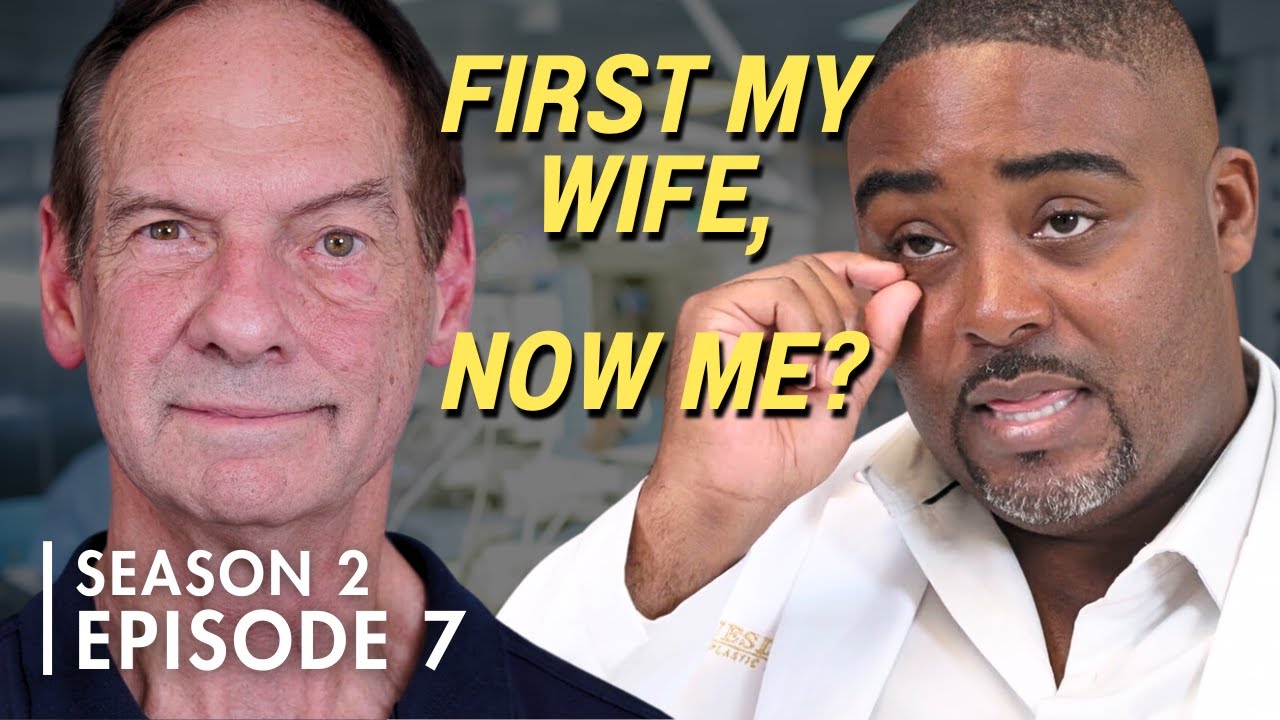
Dr. Truesdale on technique, philosophy, and patient stories — from his self-produced Beyond the Surface docuseries and his educational content library.
Lower eyelid surgery in Beverly Hills: the essentials
- Your surgeon
- Dr. Truesdale personally, or his associate Dr. Sajjadi. You choose your surgeon on the free Discovery Call.
- Where
- True Surgical Center, the AAAHC-accredited surgical center at 150 S. Rodeo Drive, Suite 220, Beverly Hills.
- Anesthesia
- MAC (monitored anesthesia care) with IV sedation, given and watched throughout by a board-certified anesthesiologist.
- Time in surgery
- About 1 to 2 hours on its own.
- Incision
- Usually inside the lower lid (transconjunctival), with no outside scar. Sometimes combined with a small skin pinch just under the lashes.
- Sutures
- Any outside sutures come out on Day 5.
- If you travel
- Plan on about a week. Most patients fly home the day the sutures come out or the day after.
- Bruising
- Bruising and discoloration fade over about 10 to 14 days.
- Exercise
- Light cardio at 2 weeks; heavier exercise at about 3 weeks, once Dr. Truesdale clears you.
- Final result
- About 3 to 6 months.
Every plan is personal, so Dr. Truesdale confirms each of these at your consultation. Recovery, week by week
How lower blepharoplasty is performed
-
01What causes the bags
Under-eye bags come from fat that has pushed forward through a weakened wall in the lower lid. No cream, filler or device removes it permanently, which is why surgery is the lasting answer when fat is the cause.
-
02The hidden incision
In most cases Dr. Truesdale works through an incision inside the lower lid (the transconjunctival approach), so the skin surface is untouched and there is no outside scar.
-
03Remove or reposition
The fat is conservatively removed, or moved into the hollow below it, to smooth the step between lid and cheek. Too much removal makes the eye look hollow, so restraint is the rule.
-
04Skin and support, when needed
If there is loose skin, a small skin pinch just under the lashes removes it. When the lower lid needs support, Dr. Truesdale may tighten its outer corner (a lateral canthopexy) at the same time.
-
05Going home
You go back to your hotel or home the same day with an adult who stays with you.
Upper blepharoplasty · Fat transfer · Tear trough filler vs. surgery · Is blepharoplasty right for you? (article)
Lower blepharoplasty recovery, week by week
This is the same protocol our patients receive in writing before surgery; the detailed instructions below come straight from it.
Swelling and bruising under the eyes; ice 20 minutes on and 20 off, and sleep with your head raised. Lubricating ointment can blur your vision for the first days. Any outside sutures come out on Day 5. Tell us about drainage, fever, or pain and swelling that increase after the third day.
Bruising and discoloration fade by about Days 10 to 14. Contact lenses from Day 10. Light cardio from Day 14.
Heavier exercise at about 3 weeks, once cleared. SPF 50 and limited sun for 6 weeks. Any lingering darkness can be treated with a prescribed lightening cream and usually clears over 3 to 6 months.
A smoother, rested under-eye. Follow-ups at 1 week and 1 month with Dr. Truesdale and at 3 months with our physician assistant.
Your detailed instructions
Eyelid incisions go through an active-appearance phase between 2–6 weeks post-surgery — during this window incisions may appear red, raised, or more visible than immediately after surgery. This is a normal part of eyelid healing. Incisions continue to mature and soften for up to one full year.
Lubricating ointment: You will use lubricating eye ointment for the first several days, which may cause temporary blurry vision. This is expected and not a concern.
Eye makeup: May be resumed at 10 days post-surgery once Dr. Truesdale has confirmed satisfactory healing at your follow-up.
Aquaphor: Keep applying Aquaphor to your eyelid incisions until one month after surgery.
Final results — including the full resolution of swelling and bruising around the eyes — are typically visible within several months. Do not evaluate the final aesthetic result before this timeline.
Tape over the sutures — leave it alone and do not get it wet. Eyes may be swollen and bruised; expect significant swelling for ~6 days. One eye may be more swollen or discolored than the other — if one is much more painful or swollen, contact the office immediately. Ice 20 minutes on, 20 minutes off for 5 days to a week. Sleep on your back with head elevated on 2–3 pillows. Do not put tension on your eyes.
Clean incisions two to three times a day with soap and water only — no peroxide near the eyes. If skin was removed, apply Aquaphor after cleaning (Vaseline if you're allergic to Aquaphor) and keep it on until one month after surgery. After 24 hours, light walks are encouraged.
Sutures removed in the office. Eye makeup may resume at Day 10, once the skin is completely closed.
Contact lenses may resume.
Itching at incision sites is normal. Acute swelling typically resolves within 2 weeks. Avoid activities that dry out the eyes (extended reading, screens). No heavy cardiovascular activity for at least 3 weeks.
Avoid sun exposure for 6 weeks; daily SPF 50+. Avoid rubbing or itching the eyelids until fully healed.
Full healing may take up to 6 months. A 3-month check-up is advisable. For under-eye darkness, Dr. Truesdale may prescribe a lightening cream; pigment usually resolves over 3–6 months.
Call us right away if one eye becomes much more swollen, painful or bulging than the other, or if your vision changes suddenly.
Full post-operative care guide · Preparing for surgery · Traveling for surgery
Lower eyelid surgery risks
Every operation carries risk. Dr. Truesdale goes through the risks that apply to your plan at your consultation, and each one is written in the consent you read and sign. For lower eyelid surgery, the consent lists:
- Chemosis. Chemosis is possible: swelling of the clear lining over the white of the eye, so the white looks puffy or jelly-like and the eye may not close fully. If it happens, keep the eye moist with over-the-counter lubricating eye drops (artificial tears). It usually resolves over the first couple of weeks.
- Dry Eye. Dry eye or irritation is possible, and a dry eye you already have may worsen; it may be temporary or permanent and may need treatment.
- Difficulty Closing the Eyes. Difficulty closing the eyes fully (lagophthalmos) is possible; it may improve over weeks to months or need treatment.
- Ectropion. The lower lid pulling down or away from the eye (ectropion) is possible and may need surgery to correct.
- Drooping Upper Eyelid. A drooping upper eyelid after surgery (ptosis) is possible.
- Asymmetry. Asymmetry of the eyelids or eyelid creases, or more or less skin or fat removed than planned, is possible and may need a revision.
- Hollowing. A hollow look is possible if too much fat is removed.
- Double Vision. Double vision from injury to an eye muscle is possible after lower eyelid surgery; it may be temporary or permanent.
- Hemosiderin Staining. Hemosiderin staining under the eyes is possible after lower eyelid surgery: iron left in the skin after bruising can leave a brown or yellow-brown discoloration that may last months or be permanent, and may need a lightening cream or laser treatment.
- Visual Change and Eye Injury. Blurred vision for a few days is expected. A scratch on the surface of the eye (corneal abrasion), injury to the eye, or loss of vision from bleeding behind the eye is possible; a sudden change in vision means call us right away.
- Bleeding on the White of the Eye. Bleeding on the white of the eye (subconjunctival hemorrhage) is possible and clears within about 3 weeks.
- Lumps and Lash Loss. Small lumps along the incision, or loss of eyelashes or brow hairs, are possible.
- Watery Eyes. Watery eyes (tearing) are possible while healing and may last longer.
- Small Cysts. Small white cysts (milia) along the incision are possible and can be removed.
When a skin pinch is part of your plan
When loose lower-lid skin is removed with a skin pinch, the consent adds:
- Asymmetry. Asymmetry of the eyelids, or more or less skin removed than planned, is possible and may need a revision.
- Hemosiderin Staining. Hemosiderin staining under the eyes is possible: iron left in the skin after bruising can leave a brown or yellow-brown discoloration that may last months or be permanent, and may need a lightening cream or laser treatment.
- Loss of Eyelashes. Loss of eyelashes is possible.
Risks of any operation
- Bleeding. Bleeding during or after surgery is possible. A collection of blood under the skin (hematoma) may need drainage or a return to the operating room, and severe bleeding may need emergency treatment or a blood transfusion.
- Infection. Infection is possible and may need antibiotics, drainage or further surgery.
- Bruising and Swelling. Bruising and swelling are expected. They may last several weeks, and swelling or discoloration may persist longer.
- Scarring. Every incision or entry point leaves a permanent scar. A scar may be raised, widened, darker, lighter or more visible than expected, and takes at least 3 months to mature.
- Keloid or Raised Scar. Itching, thickening, pain or a growth along any incision can be the first sign of a keloid (a thick, raised scar). Let us know right away so it can be injected with a steroid to stop the keloid from forming. A keloid is more likely if you have had one before and may need further injections or treatment.
- Change in Skin Sensation. Numbness, tingling or a change in skin sensation around the treated areas is possible; it may be temporary or permanent.
- Delayed Healing. Delayed healing or separation of an incision is possible and much more likely with nicotine in any form.
- Allergic Reactions. Allergic reactions to tape, sutures, skin cleansers, latex or medications are possible.
- Blood Clots. Blood clots in the legs or lungs (deep vein thrombosis or pulmonary embolism) are possible and more likely with longer surgery; your surgical team uses the clot-prevention plan chosen for you.
- Anesthesia. Risks of anesthesia and sedation are possible; the anesthesia provider reviews them with you separately.
- Pain. Pain after surgery is expected and should settle over several days; pain that lasts longer is possible.
- Result and Revision. A result that does not meet your expectations is possible: healing differs between people, no result is guaranteed, and a revision may be advised, with the fees described in your patient policy.
- Serious Complications. Serious complications, including death, are possible with any surgery or anesthesia.
- Heart and Lung Problems. Heart or lung problems, such as pneumonia or an irregular heartbeat, are possible after surgery and anesthesia.
- Medication Side Effects. Side effects of the medications used during and after surgery, such as nausea, vomiting, constipation, dizziness or trouble urinating, are possible.
- Injury to Deeper Structures. Injury to deeper structures, such as nerves, blood vessels, muscles or glands, is possible.
- Persistent Sutures. A deeper stitch may work its way to the surface and need to be removed.
When to call us right away · Before & after gallery · How to choose a facial plastic surgeon
Lower Blepharoplasty FAQs
Bring your own questions to consultation — Dr. Truesdale personally answers every one. Below are the questions patients ask most often about lower blepharoplasty.
The strongest candidates have persistent under-eye bags or hollows that are making your face look tired regardless of how rested you are. Dr. Truesdale evaluates you personally in consultation and only recommends the procedure when it will genuinely help. If a different approach would serve you better, he’ll tell you that too.
Filler can camouflage under-eye hollows temporarily. It cannot remove fat bags — it merely pads around them and can actually worsen their appearance. If fat bags are your primary issue, surgery is the only real answer. If you have hollows without bags, filler or fat transfer may be appropriate. Dr. Truesdale evaluates the anatomy carefully before recommending either.
Most patients describe the discomfort as mild to moderate. Dr. Truesdale’s team is available throughout recovery — you are not managing discomfort on your own. See “What kind of anesthesia is used?” for details on intra-operative comfort. Dr. Truesdale’s team is available throughout recovery — you are not managing discomfort on your own.
Our surgical procedures utilize a patient-focused anesthesia technique known as MAC (Monitored Anesthesia Care) and IV Sedation, ensuring your maximum comfort and safety. This method provides a level of gentle, deep sedation comparable to the comfortable experience many patients have during a colonoscopy, which we have found helps make patients less fearful. The anesthesia is administered intravenously and meticulously monitored by a hand-picked group of board-certified anesthesiologists, who are dedicated to your well-being throughout your entire procedure.
Plan on 7–10 days of social downtime. Expect mild swelling and occasional under-eye bruising. Light cardio resumes at 2 weeks; most patients are cleared for strenuous exercise at about three weeks, at a follow-up visit. Your follow-up appointments along the way are conducted by Dr. Truesdale and our physician assistant, with Dr. Truesdale seeing you personally at the key milestones.
That’s the entire standard Dr. Truesdale designs for. Under-eyes should never look pulled tight or hollowed out — conservative is always right here. Every patient is evaluated in a seated, relaxed state beforehand so the target is based on your real anatomy — never on an idealized template.
Yes. Lower-lid anatomy varies meaningfully across ethnicities — fat compartment volume, skin thickness, melanin density, and the relationship to the cheek all differ. Dr. Truesdale cares for patients of every ethnicity, and he designs every lower blepharoplasty around your specific anatomy. East Asian, African, Latin, Middle Eastern, South Asian, and European patients each have distinct lower-eyelid characteristics that should be preserved — never erased. The goal is a smoother, rested lower lid that still looks unmistakably like yours.
Permanent. Once fat bags are removed or repositioned, they do not return.
Yes. A significant portion of Dr. Truesdale’s patients travel from across the United States and internationally. The process begins with a virtual consultation with Dr. Truesdale himself (not a coordinator), followed by in-person pre-procedure evaluation. Our patient-care coordinators help arrange travel, accommodations, and local transportation, and Dr. Truesdale’s team conducts virtual follow-ups after you return home.
Request a consultation through the form at the bottom of this page, email contact@doctortruesdale.com, or call (424) 363-4112. Our team responds within one business day to schedule either an in-person consultation at 150 S. Rodeo Drive, Suite 360, Beverly Hills, or a virtual consultation worldwide. Every consultation is conducted personally by Dr. Truesdale.
Most lower blepharoplasty patients are between 40 and 65. Dr. Truesdale operates on younger patients with genetic under-eye bags and on patients into their 70s with significant festooning or hollowing. The ideal moment is when you consistently look more tired than you feel.
The cost of lower blepharoplasty can vary based on the patient’s situation, including if it is a revision surgery and if this surgery will be combined with other surgeries or treatments. The total cost may include the surgeon’s fee, operating room fees, and anesthesia fees. At Truesdale Facial Plastic Surgery, we believe the surgeon’s philosophy and experience, and your comfort with him, are just as important as the final cost of the surgery. We can provide an approximate range for this procedure over the phone, and your patient care coordinator (PCC) will confirm the pricing for you after your consultation with Dr. Truesdale.
At True Surgical Center, the AAAHC-accredited surgical center Dr. Truesdale owns at 150 S. Rodeo Drive, Suite 220, Beverly Hills. Anesthesia is MAC with IV sedation, given and monitored by a board-certified anesthesiologist.
Usually not a visible one. In most cases the incision is inside the lower lid (transconjunctival), so the skin is untouched. When loose skin also needs removing, a small skin pinch leaves a fine line just under the lashes that fades over months.
Either, depending on your anatomy. Fat that bulges can be conservatively removed, and fat can also be moved into the hollow below it to smooth the step between the lid and the cheek. Over-removal makes the eye look hollow, so Dr. Truesdale errs on the side of restraint.
Plan on about a week. Any outside sutures come out on Day 5, and most patients fly home that day or the next. Traveling for surgery →
Yes. It is often done with upper blepharoplasty, fat transfer or a deep plane facelift in one operation, with one recovery.


This procedure is performed by Dr. Truesdale or his hand-picked associate Dr. Sajjadi — discuss the right path on your free Surgery Discovery Call.
Schedule your lower blepharoplasty consultation
Permanently eliminate under-eye bags — with no external scarring. We respond same-day, Monday-Friday.
Book a Surgical Discovery Call online
After clicking the booking link, select “new patient” under Schedule Your Appointment and fill out the form to see our current availability for a Surgical Discovery Call with a Patient Care Coordinator and book immediately. Call us (424) 363-4112 for additional appointment times and information.All times are based on Los Angeles, Pacific Time (PT).
Book Discovery Call →Prefer to share details first? Submit the form and a Patient Care Coordinator will reach out the same business day (Monday–Friday).