
“Upper blepharoplasty is one of the most impactful procedures we perform — and one of the most forgiving in terms of recovery. The eyelid crease incision heals to near-invisibility within weeks, and the change is immediately apparent. Eyes that once looked tired, heavy, or closed-in suddenly appear open, refreshed, and fully alert. When combined with a brow lift or facelift, it completes the upper facial rejuvenation comprehensively.”
What upper blepharoplasty can do for you
Upper blepharoplasty removes the excess upper eyelid skin that hoods the eye and makes the gaze read as tired. The result is the alert, rested upper eye you had a decade ago — with an incision hidden entirely within the natural lid crease.
- Look rested, even when you aren’t — the eye area stops broadcasting fatigue you don’t feel.
- Eye makeup lands where it used to — shadow and liner no longer disappear into a hooded fold.
- No visible scar — the incision is hidden inside the natural upper-lid crease and fades to near invisibility.
- Seven to twelve years of result — long-lasting without preventing continued aging — a single procedure, decades of return.
- Subtle refresh, never “surprised” — conservative skin removal only; the eye you recognize, simply rested.


Ready to discuss your upper blepharoplasty goals?
Understanding the upper blepharoplasty
What the upper blepharoplasty is
Upper blepharoplasty removes the excess skin that hoods the upper lid, opening the eye and restoring the alert, rested appearance that age has obscured. The incision is hidden entirely within the natural lid crease.
Who the upper blepharoplasty is for
If any of the following describes you, the upper blepharoplasty may be worth exploring:
What makes Dr. Truesdale’s approach different
Dr. Truesdale’s approach to every procedure reflects a consistent set of principles — the same standards that inform every consultation, every surgical plan, and every post-operative follow-up.
Restraint, Not Over-Correction
The most over-done procedures in facial aesthetics are over-done because someone kept going past the right stopping point. Dr. Truesdale's rule: when the result is right, stop — even if more could technically be done. For upper blepharoplasty, that means removing only what should be removed — never aggressive skin excision that hollows the upper lid.
The Artist's Eye
Before becoming a surgeon, Dr. Truesdale was a trained portrait artist. That lens shapes every decision — proportion, light, shadow, the relationship between every feature — in a way purely clinical training alone does not. For the upper lid, that lens calibrates the relationship between brow, lid-skin show, and pre-tarsal platform.
Personal, Start to Finish
Every consultation, every surgical plan, every procedure — performed personally by Dr. Truesdale. No delegation to coordinators, PAs, or residents. Dr. Truesdale is personally involved every step of the way. Every upper-lid incision and closure is performed by Dr. Truesdale himself. The result is literally in his hands.
Natural Is Non-Negotiable
The only acceptable outcome is one that no one can identify as a procedure — a result that reads as a better version of you. No pulled look, no frozen expression, no obvious work. The upper-bleph goal: an open, alert eye that simply looks rested — not a “done” eye area.
“The upper lid should look like it always did — just without the weight on top of it.”
— Dr. Carl Truesdale, MD
Upper blepharoplasty before & afters
Real upper blepharoplasty patients of Dr. Truesdale. Every eyelid is evaluated personally so the result opens the eye without changing who you are.


Your transformation starts with a conversation.
From first consultation to final reveal
We always tell our patients to ‘trust the process.’ You are in good hands on every step of the journey to your unique masterpiece.
Consultation
Personal session with Dr. Truesdale — facial analysis, honest assessment of candidacy, and a clear plan for what the procedure can and cannot achieve.
Planning
Medical clearance, pre-operative instructions, and a personalized plan Dr. Truesdale reviews with you before the day of the procedure.
Procedure Day
Performed personally by Dr. Truesdale under MAC (Monitored Anesthesia Care) with IV sedation — gentle, deep sedation comparable to a colonoscopy, administered and monitored throughout by a hand-selected, board-certified anesthesiologist. Incision hidden in the natural upper-lid crease.
Suture Removal
Fine sutures removed at Day 5. Bruising resolves over 7–14 days. Eye makeup may resume at Day 10, once the skin is completely closed.
Eye Shape Settles
Major swelling resolved. Eyes look open and rested. Eye makeup may resume at Day 10, once the skin is completely closed. Contact lenses may resume at Day 10. Mild light sensitivity is normal for the first few days. Avoid activities that dry the eyes (extended reading, screens, TV) for the first week. Incisions enter an active-appearance phase (Weeks 2–6) where they may appear pink — this is a normal part of eyelid healing.
Look and Feel Like a Masterpiece
Open, rested eyes with a nearly invisible scar hidden in the lid crease.
Individual timelines vary. Dr. Truesdale sets realistic, patient-specific expectations during your consultation — not exaggerated claims.
See if an Upper Blepharoplasty is right for you.
See the work in motion
Dr. Truesdale on technique, philosophy, and patient stories — from his self-produced Beyond the Surface docuseries and his educational content library.

Upper Blepharoplasty FAQs
Bring your own questions to consultation — Dr. Truesdale personally answers every one. Below are the questions patients ask most often about upper blepharoplasty.
The strongest candidates have excess upper-eyelid skin that hoods the eye, makes the gaze look tired, or — in significant cases — interferes with vision. Dr. Truesdale evaluates you personally in consultation and only recommends the procedure when it will genuinely help. If a different approach would serve you better, he’ll tell you that too.
If the heaviness is primarily from excess upper-lid skin, blepharoplasty alone often solves it. If a meaningful part is the brow sitting low and dropping onto the lid, the brow must be lifted as well — or a blepharoplasty alone will leave an incomplete result. Many patients benefit from both. Dr. Truesdale assesses the brow position and upper-lid anatomy precisely in consultation.
Most patients describe the discomfort as mild to moderate. The procedure is typically performed under local anesthesia with or without light sedation. Dr. Truesdale’s team is available throughout recovery — you are not managing discomfort on your own.
Our surgical procedures utilize a patient-focused anesthesia technique known as MAC (Monitored Anesthesia Care) and IV Sedation, ensuring your maximum comfort and safety. This method provides a level of gentle, deep sedation comparable to the comfortable experience many patients have during a colonoscopy, which we have found helps make patients less fearful. The anesthesia is administered intravenously and meticulously monitored by a hand-picked group of board-certified anesthesiologists, who are dedicated to your well-being throughout your entire procedure.
Plan on 7–10 days of social downtime. Expect mild swelling and possible small bruises that resolve by week 2. Light cardio resumes at 2 weeks; most patients are cleared for strenuous exercise at about three weeks, at a follow-up visit. Your follow-up appointments along the way are conducted by Dr. Truesdale and our physician assistant, with Dr. Truesdale seeing you personally at the key milestones.
That’s the entire standard Dr. Truesdale designs for. The upper eye should read open and rested, not startled. Every patient is evaluated in a seated, relaxed state beforehand so the target is based on your real anatomy — never on an idealized template.
10–15 years. The skin removed does not return. Most patients never need a second upper blepharoplasty in their lifetime.
Yes. A significant portion of Dr. Truesdale’s patients travel from across the United States and internationally. The process begins with a virtual consultation with Dr. Truesdale himself (not a coordinator), followed by in-person pre-procedure evaluation. Our patient-care coordinators help arrange travel, accommodations, and local transportation, and Dr. Truesdale’s team conducts virtual follow-ups after you return home.
Request a consultation through the form at the bottom of this page, email contact@doctortruesdale.com, or call (424) 363-4112. Our team responds within one business day to schedule either an in-person consultation at 150 S. Rodeo Drive, Suite 360, Beverly Hills, or a virtual consultation worldwide. Every consultation is conducted personally by Dr. Truesdale.
Most upper blepharoplasty patients are between 40 and 70, though some patients with hooded lids genetically benefit as early as their mid-30s. The best signal isn’t age — it’s when upper-lid skin begins to rest on the lashes, obscure eye makeup, or make you look tired even when you feel rested.
The cost of upper blepharoplasty can vary based on the patient’s situation, including if it is a revision surgery and if this surgery will be combined with other surgeries or treatments. The total cost may include the surgeon’s fee, operating room fees, and anesthesia fees. At Truesdale Facial Plastic Surgery, we believe the surgeon’s philosophy and experience, and your comfort with him, are just as important as the final cost of the surgery. We can provide an approximate range for this procedure over the phone, and your patient care coordinator (PCC) will confirm the pricing for you after your consultation with Dr. Truesdale.
When functional visual impairment from excess eyelid skin is documented — typically through a visual field test demonstrating superior field restriction — a portion of the upper blepharoplasty may be covered by insurance as a functional procedure. Dr. Truesdale’s team can advise on documentation requirements. The aesthetic portion is always a patient expense.

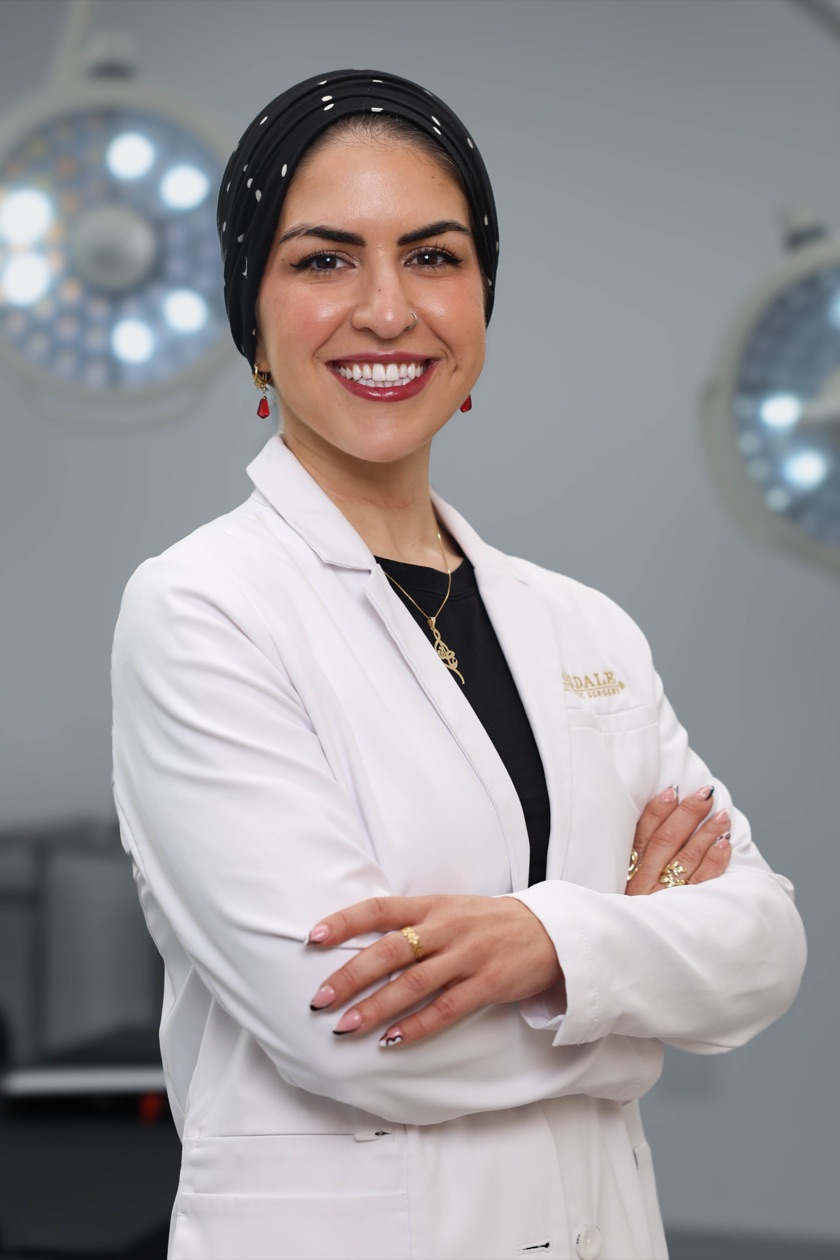
This procedure is performed by Dr. Truesdale or his hand-picked associate Dr. Sajjadi — discuss the right path on your free Surgery Discovery Call.
Schedule your eyelid surgery consultation
Upper blepharoplasty is one of the most rewarding procedures we perform — dramatic results, minimal recovery. We respond same-day, Monday-Friday.
Book a Surgical Discovery Call online
After clicking the booking link, select “new patient” under Schedule Your Appointment and fill out the form to see our current availability for a Surgical Discovery Call with a Patient Care Coordinator and book immediately. Call us (424) 363-4112 for additional appointment times and information.All times are based on Los Angeles, Pacific Time (PT).
Book Discovery Call →Prefer to share details first? Submit the form and a Patient Care Coordinator will reach out the same business day (Monday–Friday).