
“The facelift is not a procedure of skin-tightening. It is about restructuring the foundation of the lower face and neck — the skin lies passively over the reworked muscle layers. Think of your skin as the tablecloth, and the layers underneath as the table. If the shape of the table is changed, the tablecloth lies perfectly, without tension — and that is when results look truly natural.”
What the deep plane facelift and neck lift can do for you
Dr. Truesdale performs the deep plane facelift and a deep neck lift together as one operation — because the face and the neck age as one structure, and correcting one without the other always shows. The result is a lifted jawline, a sharp neck angle, and a completely rested face that holds for 10–15 years.
- A jawline, not jowls — the softening along the lower face is lifted cleanly back to where it used to sit.
- A sharp neck, included — every deep plane facelift at this practice includes a deep neck lift, because the neck is half of a lower-face result.
- Softened mid-face lines — the deep creases around the mouth and nasolabial folds quiet as the tissue is repositioned.
- Lasts ten to fifteen years, not one season — because the foundation is repaired, the result holds long after any filler, laser, or skin-only lift would have faded.
- Never reads as “done” — no pulled look, no wind-swept temples. Patients hear “you look rested,” not “what did you have done.”

Ready to discuss your facelift goals?
Understanding the deep plane facelift & neck lift
What the deep plane facelift and neck lift is
The deep plane facelift works on the deeper layers of the face. Instead of simply tightening the skin, Dr. Truesdale works beneath the skin to release the ligaments that hold your face in its aged position — allowing the entire facial foundation (muscle, fat, and deeper tissue) to be repositioned upward as one unit. The skin then lies passively over that restored foundation, which is why the result looks natural, never pulled, and holds for 10–15 years.
Every deep plane facelift Dr. Truesdale performs includes a deep neck lift. The face and the neck age as one structure, and correcting one without the other always shows. Addressing both in a single operation is what produces the clean jawline, the sharp neck angle, and the completely harmonious lower-face result that has become his signature.
- —Repositions SMAS layer only
- —Ligaments remain tethered
- —Results: 5–8 years typical
- —Limited midface correction
- ✓Releases retaining ligaments
- ✓Entire facial mass mobilized
- ✓Results: 10–15+ years typical
- ✓Full midface and jowl correction
Dr. Truesdale’s preferred facelift is a preservation extended deep plane facelift and neck lift with a high SMAS entry point — the most anatomically complete facelift available, and is also able to lift the mid-face.
Who the deep plane facelift & neck lift is for
If any of the following describes you, the deep plane facelift & neck lift may be worth exploring:
Dr. Truesdale’s facelift and neck lift approach
Dr. Truesdale’s approach to the deep plane facelift and neck lift reflects a consistent set of principles — the same standards that inform every consultation, every surgical plan, and every post-operative follow-up.
Restraint, Not Over-Correction
The most over-done procedures in facial aesthetics are over-done because someone kept going past the right stopping point. Dr. Truesdale's rule: when the result is right, stop — even if more could technically be done. For the facelift, that means stopping at a natural lift — never the windswept tightness of an over-pulled face.
The Artist's Eye
Before becoming a surgeon, Dr. Truesdale was a trained portrait artist. That lens shapes every decision — proportion, light, shadow, the relationship between every feature — in a way purely clinical training alone does not. For facelift specifically, this shapes the read between cheek, jaw, and neck — so the result holds together from every angle, not just head-on.
Personal, Start to Finish
Every consultation, every surgical plan, every procedure — performed personally by Dr. Truesdale. No delegation to coordinators, PAs, or residents. Dr. Truesdale is personally involved every step of the way. Every facelift is performed by Dr. Truesdale himself — no resident dissection, no shared OR time.
Natural Is Non-Negotiable
The only acceptable outcome is one that no one can identify as a procedure — a result that reads as a better version of you. No pulled look, no frozen expression, no obvious work. The deep plane facelift goal: friends say you look rested, never that you look “done.”
How Dr. Truesdale performs the deep plane face and neck lift
A step-by-step description of The Truesdale Facelift Technique — the submental deep-neck approach, the high lateral SMAS entry, the extended ligament release, and the Deep Mastoid Crevasse Technique.
Why choose Dr. Truesdale for your facelift
The facelift is one of the most technically demanding operations in facial plastic surgery. The right surgeon makes the difference between a result that looks natural for a decade and one that looks pulled, windswept, or operated within months. Here is what distinguishes Dr. Truesdale.
Other types of facelifts
Beyond the deep plane facelift, there are other techniques designed for specific patient profiles. Dr. Truesdale offers each of these for the right candidate — but each has limitations worth understanding before you decide which is right for you.
The endoscopic facelift
An endoscopic facelift uses small, hidden incisions and a tiny camera to lift and reposition facial tissues without the longer incisions of a traditional or deep plane facelift. It targets the upper-to-mid face — brow, temples, and cheek — through ports rather than open access.
Best for: younger patients with early midface descent, mild cheek flattening, or temple/brow heaviness — where the goal is repositioning rather than ligament release and the lower face and neck do not need to be addressed.
- Does not address the neck — jowling, platysmal banding, or cervicomental angle issues require a full deep plane facelift and neck lift.
- Does not release the retaining ligaments the way a deep plane facelift does, so it cannot reposition tissue as completely or hold results as long.
- Results are subtler and shorter-lived — typically 5–7 years, compared to 10–15 years with a deep plane facelift.
- Not a substitute for a deep plane lift in patients with significant skin laxity, jowling, or lower-face descent.
The mini facelift
A mini facelift (sometimes marketed as an “S-lift,” “weekend lift,” or “short-scar facelift”) uses shorter incisions placed only around the front of the ear to tighten the lower face — the jawline, lower cheek, and early jowling — without entering the deeper tissue planes or addressing the neck.
Best for: younger patients with early jowling and mild jawline laxity, where the neck and midface are still well-positioned and the goal is a small refinement rather than full rejuvenation.
- Does not address the neck. Platysmal banding, deep fat, or true neck laxity cannot be corrected through a mini-facelift incision.
- Does not release the retaining ligaments. The result relies on tightening superficial tissue rather than repositioning the deeper structural foundation.
- Results last roughly 3–5 years — meaningfully shorter than a deep plane facelift’s 10–15 years — and the lift can loosen visibly within the first 1–2 years if the underlying anatomy was actually a deep-plane candidate.
- Frequently underperforms expectations in patients with moderate-to-significant aging, because the technique cannot reach the structures driving the visible aging in the first place.
Dr. Truesdale will tell you honestly which technique fits your anatomy and goals. If a deep plane facelift is what you actually need, he will say so — even if you came in expecting a smaller procedure.
“The deep plane facelift is the foundation of transformational results — it is core to why my patients look as good on the outside as they feel on the inside.”
— Dr. Carl Truesdale, MD
Facelift and Neck Lift before & afters
Real facelift and neck lift patients of Dr. Truesdale. Each result reflects a customized surgical plan designed for that individual’s anatomy, skin quality, and aesthetic goals.


Your transformation starts with a conversation.
From first consultation to final reveal
We always tell our patients to ‘trust the process.’ You are in good hands on every step of the journey to your unique masterpiece.
Consultation
Personal session with Dr. Truesdale — facial analysis, honest assessment of candidacy, and a clear plan for what the procedure can and cannot achieve.
Planning
Medical clearance, pre-operative instructions, and a personalized plan Dr. Truesdale reviews with you before the day of the procedure.
Procedure Day
Performed personally by Dr. Truesdale at our AAAHC-accredited True Surgical Center under MAC (Monitored Anesthesia Care) with IV sedation — gentle, deep sedation comparable to a colonoscopy, administered and monitored throughout by a hand-selected, board-certified anesthesiologist. Duration depends on whether neck lift, fat transfer, or other procedures are combined.
In-Office Follow-Ups
Overnight nurse stays with you. In-office follow-ups: dressing removal Day 1, hemostatic net removed Day 2, drains removed Day 3 (if drains were placed; for men, drains usually come out on Day 5). Sutures and staples out at Day 7. Move your head and shoulders as a unit during the first 2 weeks to avoid neck strain. Light earrings may be worn at 2 weeks if desired. Most patients socially presentable by Day 10–14.
Bruising Resolves
Bruising fades. Swelling continues to settle, especially around the jawline. Light cardio at Day 14; strenuous exercise around 3 weeks, once your surgeon clears you. Tightness and numbness are normal and improve over 2–3 months.
Look and Feel Like a Masterpiece
The full facial harmony is revealed. Friends notice you look rested, without knowing why.
Individual timelines vary. Dr. Truesdale sets realistic, patient-specific expectations during your consultation — not exaggerated claims.
See if a Facelift is right for you.
See the work in motion
Dr. Truesdale on technique, philosophy, and patient stories — from his self-produced Beyond the Surface docuseries and his educational content library.

Why many patients choose The Masterpiece Surgery™
For patients seeking comprehensive facial rejuvenation in a single transformative session, Dr. Truesdale developed The Masterpiece Surgery™ — his signature approach combining deep plane facelift with multiple complementary procedures into one anesthetic event.
Rather than addressing individual concerns in isolation, The Masterpiece treats the face as a unified composition. A typical Masterpiece may combine a deep plane facelift with neck lift, blepharoplasty, fat transfer, brow lift, and skin resurfacing — all performed in a single session at True Surgical Center, with one recovery period instead of several.
The result: a complete, harmonious transformation that looks like the most refined version of you — not a series of individual corrections. Drawing on his background as a trained portrait artist, Dr. Truesdale plans every element in relation to the whole face, producing results that are dramatic yet completely natural.
Deep plane facelift in Beverly Hills: the essentials
- Your surgeon
- Dr. Truesdale personally, or his associate Dr. Sajjadi. You choose your surgeon on the free Discovery Call.
- Where
- True Surgical Center, the AAAHC-accredited surgical center at 150 S. Rodeo Drive, Suite 220, Beverly Hills.
- Anesthesia
- Usually MAC (monitored anesthesia care) with IV sedation rather than general anesthesia, given and watched throughout by a board-certified anesthesiologist.
- Time in surgery
- About 3 to 5 hours. Longer when other procedures are added in the same session.
- The first night
- One of our nurses takes you back to your hotel or aftercare suite and stays with you overnight.
- First-week visits
- Day 1 dressing off · Day 2 hemostatic net out · Day 3 drains out (Day 5 for men) · Day 7 sutures and staples out.
- If you travel
- Arrive at least a day before surgery and plan on 7 to 10 days in Beverly Hills, staying within 20 minutes of the office.
- Back in public
- Most patients feel ready to be seen at about 10 to 14 days.
- Exercise
- Light cardio at 2 weeks; heavier exercise at about 3 weeks, once Dr. Truesdale clears you.
- Final result
- Swelling keeps settling for 6 to 12 months.
The facts patients ask about first. Every plan is personal, so Dr. Truesdale confirms each of these for you at your consultation. Recovery, week by week
What happens on surgery day
The deep plane face and neck lift is one operation, done in the same order every time: the neck first, then the face. Here is what that looks like for you.
-
01Before you go in
You arrive at True Surgical Center having had nothing to eat or drink after midnight. You meet your anesthesiologist, and Dr. Truesdale goes over the plan with you before you go into the operating room.
-
02The neck first
Through an incision of about 2 to 2.5 cm hidden under the chin, Dr. Truesdale corrects the deep neck directly: fat beneath the muscle, the platysma bands, bulky digastric muscles, and a low-hanging submandibular gland when it is part of the problem. The neck sets the foundation the facelift is built on.
-
03The face
Incisions are hidden in the hair of the temple and along the inside edge of the ear’s cartilage. The deep layer (the SMAS) is entered high on the cheekbone, the retaining ligaments are released, and the cheek, jowl and neck tissues are lifted together as one unit along a vertical line, then held with permanent sutures.
-
04Closing
Only the skin that is truly extra is trimmed, so the incisions close without tension, using very fine 6-0 sutures. A compression dressing goes on, and small drains may be placed for the first few days.
-
05Going home
A nurse takes you back to your hotel or aftercare suite and stays the night. You come back to the office the next morning for your Day 1 visit.
The Truesdale Facelift Technique, step by step → · Adding eyelids, brow or fat transfer: The Masterpiece Surgery™ · The deep neck lift explained
Facelift recovery, week by week
This is the same protocol our patients receive in writing before surgery. The detailed instructions below come straight from it, so they change only when Dr. Truesdale changes them.
Swelling and bruising peak around days 3 to 4. Office visits on Days 1, 2 and 3 (Day 5 for men’s drains) and Day 7, when sutures and staples come out. Sleep with your head raised, walk from the first day, and move your head and shoulders together.
Most bruising fades. Light cardio from Day 14, light earrings from 2 weeks. Many patients feel ready to be seen at 10 to 14 days.
Heavier exercise at about 3 weeks, once Dr. Truesdale clears you. Hair color and heat styling from 1 month. SPF 50, a hat and limited sun for 6 weeks. Tightness and numbness ease over 2 to 3 months.
Swelling along the jaw and neck keeps settling, and the final result shows at 6 to 12 months. Follow-ups at 1 week, 1 month and 3 months with Dr. Truesdale; optional visits at 6 months and 1 year.
Your detailed instructions
One of our nurses will accompany you back to your accommodation and stay with you overnight. You will have a facial compression garment, sutures, and possibly staples. Drains may be in place to collect excess fluid and reduce swelling. It is normal to feel drowsy, swollen, and bruised, with significant eye swelling that may make it difficult to open your eyes.
Return to the office for your Day 1 visit; your dressing is removed. Until your drains are out, take a body shower only and keep your face dry. Do not scrub or pick. Brush teeth gently with a small toothbrush. Clean incisions with gentle soap and water to remove dried blood, crusts, or scabs; pat dry, then apply a thin layer of Aquaphor.
Return to the office on Day 2 for hemostatic net suture removal, and on Day 3 for drain removal (if drains were placed). For men, drains usually come out on Day 5. Once your drains are out, you may take a full shower and gently wash your hair in cool to lukewarm water. Continue cleaning incisions with gentle soap and water to remove any dried blood or crust, then keep them moist with a thin layer of Aquaphor.
Wash your hands before touching your drains or dressing. Gently strip ('milk') the tubing as you were shown. Once a day, at the same time each day, record the time and the amount, pour out the fluid, then squeeze the bulb and recap it; keep the bulb secured inside your dressing or clothing. You'll come back to the office on Day 1, Day 2 and Day 3. Your hemostatic net comes off on Day 2, and your drains come out on Day 3 with our physician assistant; for men, drains usually come out on Day 5, unless Dr. Truesdale tells you otherwise. Removal can be uncomfortable.
If you have staples in your hairline or scalp, they stay in until your Day 7 visit. Keep them clean with mild soap and water. Don't let blood dry or crust on the incisions — soften and rinse it away with water, without scrubbing or picking. Apply a very light layer of Aquaphor along the incision line. Be gentle with the hair around it: no tight hairstyles, ponytails, or anything that pulls on the scalp.
Apply ice compresses with a cloth barrier — never directly on skin — 20 minutes on, 20 minutes off, for five days to a week after every procedure. This is when it helps most. You don't need to ice while you sleep.
Sutures and surgical staples are removed on Day 7. Be gentle with incisions thereafter — they will not yet have full strength. Do not pull your ear forward.
Keep incisions clean and moist at all times. Wash your hands thoroughly before touching any incision area. Keep incisions out of direct sunlight.
Sleep on your back with your head elevated on two to three pillows, a wedge pillow, or a recliner, for the full first two weeks. Do not sleep flat — it significantly increases swelling. Move your head and shoulders as a unit, and avoid straining or bending your neck.
Light walking is encouraged from day one — it promotes circulation and reduces clot risk. No heavy lifting, bending at the waist, or straining for three weeks. Avoid any activity that raises blood pressure. Light cardio — elliptical, spin bike, low resistance — may resume at two weeks, for every procedure. Confirm with your surgeon at your follow-up before increasing intensity. Heavy cardio, weightlifting, bending over, yoga, and Pilates typically resume at three weeks — once your surgeon clears you at a follow-up. Three weeks is a judgment, not a date that clears itself.
Plan to arrive at least a day before surgery and to be here for 7 to 10 days; we'll confirm the right length of stay for your surgery. Please stay within 20 minutes of our office, even in heavy traffic: one of our preferred hotels, or Luxe Serenity Aftercare, which we can help you book. Your hotel and travel arrangements, and their costs, are your responsibility. You'll come back to the office on Day 1, Day 2 and Day 3: our physician assistant removes your hemostatic net on Day 2 and your drains on Day 3 (for men, drains usually come out on Day 5); Dr. Truesdale removes your sutures on Day 7.
You may color your hair again one month after surgery — the same for every procedure. No heat on your hair or scalp for one month after surgery: a blow-dryer on the cool setting is fine, but no warm or hot settings and no hot tools. The skin around your incisions stays numb for a while, so you may not feel how hot it's getting, and heat can burn the healing area. Light earrings may be worn at 2 weeks post-op if desired.
Avoid alcohol and salt during recovery — both worsen swelling. Avoid hot baths and saunas. Wear front-closing or zip-front clothing for easier dressing.
Use SPF 50 daily, wear a hat when you can, and limit sun exposure — for at least six weeks once you are cleared.
Makeup may be applied to surrounding skin (not over incisions) once sutures are removed. Makeup may be applied to incisions another 7 days after suture removal — only after Dr. Truesdale has confirmed adequate healing.
Two days after sutures are removed, begin applying silicone scar gel twice daily to the incisions for the next month. Thickness, pain or itching behind your ears after a face lift or neck lift can be a keloid starting to form. Call us as soon as you notice it: a steroid injection given early prevents it.
Full post-operative care guide · Preparing for surgery · Traveling for surgery · Facelift recovery, week by week (article)
Deep plane facelift cost in Beverly Hills
As of October 2026, a deep plane face and neck lift starts at $65,000 with Dr. Truesdale and at $20,000 with his associate surgeon, Dr. Sajjadi. Both prices are all in: the surgeon’s fee, anesthesia, and the facility fee at True Surgical Center. Fat transfer is not included.
These are starting prices. Most patients address more than the lower face and neck in the same operation, so most plans are higher; every plan is quoted individually after your consultation, and our team can give you an approximate range on a free Discovery Call. Your written quote is valid for 60 days. The consultation fee ($750 with Dr. Truesdale, $150 with Dr. Sajjadi) is credited in full toward surgery, and financing is available, including 0% options for qualified applicants.
What the price includes and what changes it → · Meet Dr. Sajjadi · Financing
Facelift risks, and how we keep you safe
Every operation carries risk. Dr. Truesdale goes through the risks that apply to your plan at your consultation, and each one is written in the consent you read and sign. For a deep plane face and neck lift, the consent lists:
- Nerve Injury. Weakness of the facial muscles from injury to a branch of the facial nerve is possible; it may be temporary or permanent.
- Numbness. Numbness of the cheeks, ears, earlobes or neck is possible and may last months; it may be temporary or permanent.
- Hematoma, Seroma or Sialoma. A collection of blood under the skin (hematoma) is the most common early problem after a face lift, more likely in men and with high blood pressure, and may need a return to the operating room. A collection of fluid (seroma) or saliva (sialoma) may need drainage.
- Skin Necrosis. Skin necrosis is possible: if the blood supply to an area of skin is interrupted, that skin can die, leaving a wound that heals slowly with a scar. Smoking and nicotine in any form make it much more likely.
- Hair Loss. Hair loss along the incisions, or a change of the hairline or sideburn, is possible; it may be temporary or permanent.
- Keloid Behind the Ear. Itching or a growth behind the ear or along an incision can be a sign of a keloid. Let us know right away so it can be injected with a steroid to stop the keloid from forming.
- Hemosiderin Staining. Hemosiderin staining is possible: iron left in the skin after bruising can leave a brown or yellow-brown discoloration that may last months or be permanent, and may need a lightening cream or laser treatment.
- Asymmetry and Irregularities. Asymmetry, depressions, lumps, contour irregularity or residual loose skin are possible and may need a revision.
- Ear Deformities. A change in the shape of the earlobe or the tragus (the bump in front of the ear canal) is possible, including an earlobe pulled down toward the cheek.
- First Bite Syndrome. First bite syndrome is possible: a sharp pain in the cheek with the first bites of a meal, which may fade over months.
- Tightness. Tightness of the face, jaw line and neck, and firmness under the skin, are expected while healing and may last several months.
- Aging. The face continues to age after surgery.
- Visible Scars. Scars in front of and behind the ear may be visible or widened, and the sideburn or the hairline behind the ear may shift.
- Neck Bands and Fullness. Neck bands or fullness under the chin may return over time.
When part of a salivary gland is reduced
Every face and neck lift consent includes a possible partial removal of the submandibular gland, with these added risks:
- Dry Mouth. Dry mouth from reduced saliva is expected for a few weeks and may last longer.
- Nerve Injury. Weakness of the lower lip (marginal mandibular nerve), numbness of the tongue, a change in taste, or weakness of the tongue (hypoglossal nerve) is possible; each may be temporary or permanent.
- Saliva Leak. A leak or collection of saliva under the skin (sialoma or fistula) is possible and may need drainage.
- Bleeding in the Neck. Bleeding into the neck is possible and may need a return to the operating room; bleeding that presses on the airway needs emergency treatment.
- Neck Contour. A change in the contour of the neck under the jaw is possible.
Risks of any operation
- Bleeding. Bleeding during or after surgery is possible. A collection of blood under the skin (hematoma) may need drainage or a return to the operating room, and severe bleeding may need emergency treatment or a blood transfusion.
- Infection. Infection is possible and may need antibiotics, drainage or further surgery.
- Bruising and Swelling. Bruising and swelling are expected. They may last several weeks, and swelling or discoloration may persist longer.
- Scarring. Every incision or entry point leaves a permanent scar. A scar may be raised, widened, darker, lighter or more visible than expected, and takes at least 3 months to mature.
- Keloid or Raised Scar. Itching, thickening, pain or a growth along any incision can be the first sign of a keloid (a thick, raised scar). Let us know right away so it can be injected with a steroid to stop the keloid from forming. A keloid is more likely if you have had one before and may need further injections or treatment.
- Change in Skin Sensation. Numbness, tingling or a change in skin sensation around the treated areas is possible; it may be temporary or permanent.
- Delayed Healing. Delayed healing or separation of an incision is possible and much more likely with nicotine in any form.
- Allergic Reactions. Allergic reactions to tape, sutures, skin cleansers, latex or medications are possible.
- Blood Clots. Blood clots in the legs or lungs (deep vein thrombosis or pulmonary embolism) are possible and more likely with longer surgery; your surgical team uses the clot-prevention plan chosen for you.
- Anesthesia. Risks of anesthesia and sedation are possible; the anesthesia provider reviews them with you separately.
- Pain. Pain after surgery is expected and should settle over several days; pain that lasts longer is possible.
- Result and Revision. A result that does not meet your expectations is possible: healing differs between people, no result is guaranteed, and a revision may be advised, with the fees described in your patient policy.
- Serious Complications. Serious complications, including death, are possible with any surgery or anesthesia.
- Heart and Lung Problems. Heart or lung problems, such as pneumonia or an irregular heartbeat, are possible after surgery and anesthesia.
- Medication Side Effects. Side effects of the medications used during and after surgery, such as nausea, vomiting, constipation, dizziness or trouble urinating, are possible.
- Injury to Deeper Structures. Injury to deeper structures, such as nerves, blood vessels, muscles or glands, is possible.
- Persistent Sutures. A deeper stitch may work its way to the surface and need to be removed.
How we keep you safe
- Surgery only in an AAAHC-accredited surgical center, with a board-certified anesthesiologist.
- Medical clearance, and blood-clot risk screening, before every face and neck lift.
- No nicotine in any form for 3 weeks before surgery and 3 months after.
- A nurse with you the first night, and someone with you for the first 72 hours.
- Office visits on Days 1, 2, 3 and 7, and a direct line to the team the whole time.
When to call us right away · Before & after gallery · How to choose a facial plastic surgeon · Request a consultation
Deep Plane Facelift & Neck Lift FAQs
Bring your own questions to consultation — Dr. Truesdale personally answers every one. Below are the questions patients ask most often about deep plane facelift & neck lift.
A traditional facelift (often called a “skin” or “SMAS” lift) tightens the skin and the most superficial layer of tissue beneath it. It helps, but the ligaments that actually hold the face in its aged position are left untouched — which is why skin-only and SMAS lifts tend to loosen within 5–8 years and can pull the skin unnaturally in the process. The deep plane facelift goes one crucial step further: Dr. Truesdale releases those ligaments and repositions the entire facial foundation (muscle, fat, and deeper tissue) as one unit. The skin lies passively on top. The result is natural, holds for 10–15 years, and never reads as “work.” Dr. Truesdale performs the deep plane facelift exclusively.
The strongest candidates have meaningful jowling, loss of jawline definition, neck banding, and midface descent that creams and neurotoxin can’t address. Dr. Truesdale evaluates you personally in consultation and only recommends the procedure when it will genuinely help. If a different approach would serve you better, he’ll tell you that too.
If the lower face is still fairly defined and the primary concern is the neck, a deep neck lift alone may suffice. If there’s jowling, jawline loss, or midface descent as well, a combined deep-plane facelift and neck lift produces a harmonious result where a neck lift alone would leave the face visually mismatched. Dr. Truesdale evaluates both zones in consultation and recommends the minimum procedure that will actually solve the problem.
Most patients describe the discomfort as mild to moderate. Dr. Truesdale’s team is available throughout recovery — you are not managing discomfort on your own. See “What kind of anesthesia is used?” for details on intra-operative comfort.
Our surgical procedures utilize a patient-focused anesthesia technique known as MAC (Monitored Anesthesia Care) and IV Sedation, ensuring your maximum comfort and safety. This method provides a level of gentle, deep sedation comparable to the comfortable experience many patients have during a colonoscopy, which we have found helps make patients less fearful. The anesthesia is administered intravenously and meticulously monitored by a hand-picked group of board-certified anesthesiologists, who are dedicated to your well-being throughout your entire procedure.
Plan on 10–14 days of social downtime. Expect mild-to-moderate swelling and bruising that peaks at day 3–4. Light cardio resumes at 2 weeks; most patients are cleared for strenuous exercise at about three weeks, at a follow-up visit. Your follow-up appointments along the way are conducted by Dr. Truesdale and our physician assistant, with Dr. Truesdale seeing you personally at the key milestones.
That’s the entire standard Dr. Truesdale designs for. No pulled look, no windswept appearance — just a jawline that reads like the one you had 10–15 years ago. Every patient is evaluated in a seated, relaxed state beforehand so the target is based on your real anatomy — never on an idealized template.
Yes. Dr. Truesdale is faculty and a live surgeon at the NYC Facelift & Rhinoplasty Master Course™, where he has personally performed live deep plane facelift and neck lift surgery to teach the technique to other practicing surgeons. He is also a repeat podium presenter at AAFPRS (American Academy of Facial Plastic and Reconstructive Surgery) national conferences on facelift and neck lift technique, including presentations on deep necklifting, facelift and revision rejuvenation strategies, and facelifting scar management. See his full speaking and teaching history.
Typically 10–15 years, because the retaining ligaments are released rather than just tightened over. The face keeps aging naturally after surgery.
Yes. A significant portion of Dr. Truesdale’s patients travel from across the United States and internationally. The process begins with a virtual consultation with Dr. Truesdale himself (not a coordinator), followed by in-person pre-procedure evaluation. Our patient-care coordinators help arrange travel, accommodations, and local transportation, and Dr. Truesdale’s team conducts virtual follow-ups after you return home.
Request a consultation through the form at the bottom of this page, email contact@doctortruesdale.com, or call (424) 363-4112. Our team responds within one business day to schedule either an in-person consultation at 150 S. Rodeo Drive, Suite 360, Beverly Hills, or a virtual consultation worldwide. Every consultation is conducted personally by Dr. Truesdale.
Dr. Truesdale performs the deep plane facelift and deep neck lift together as one unified operation — the most anatomically complete facelift available. He does not perform skin-only lifts, thread lifts, or isolated mini-lifts, because those approaches produce temporary results and often require a revision that full deep plane surgery could have solved from the start. For patients whose aging involves multiple zones of the face at once (eyes, brows, volume, skin), the deep plane facelift and neck lift is typically combined into The Masterpiece Surgery™ — Dr. Truesdale’s signature comprehensive plan performed in a single session.
Most deep plane facelift patients are between 45 and 70, though Dr. Truesdale has operated on patients in their late 30s and into their 80s. The right moment isn’t a number — it’s when lifestyle changes, skincare, and non-surgical treatments no longer keep pace with what you see in the mirror. Doing the procedure before the aging is severe often produces the most elegant, undetectable result, and the most youthful-looking decade afterward.
As of October 2026, a deep plane face and neck lift starts at $65,000 with Dr. Truesdale and at $20,000 with his associate surgeon, Dr. Sajjadi. Both prices are all in: the surgeon’s fee, anesthesia, and the facility fee at True Surgical Center. Fat transfer is not included. Most patients address more than the lower face and neck in the same operation, so most plans are higher; every plan is quoted individually after your consultation, and our team can give you an approximate range on a free Discovery Call. What goes into the cost →
At True Surgical Center, the AAAHC-accredited surgical center Dr. Truesdale owns at 150 S. Rodeo Drive, Suite 220, Beverly Hills. Your anesthesia is given and monitored by a board-certified anesthesiologist, and a nurse stays with you overnight after surgery.
The facelift incisions are hidden in the hair of the temple and along the inside edge of the ear’s cartilage, and the neck is reached through an incision of about 2 to 2.5 cm under the chin. The temple incision is beveled so hair grows through it, and the skin is closed without tension using very fine 6-0 sutures. Scars fade over months but never disappear completely. Silicone scar gel starts two days after the sutures come out, and thickness, pain or itching behind the ears should be reported right away, because an early steroid injection prevents a keloid.
Small drains may be placed. Your dressing comes off at your Day 1 visit, the hemostatic net on Day 2, and the drains on Day 3 (for men, usually Day 5) with our physician assistant. Dr. Truesdale removes your sutures and any staples on Day 7.
Plan to arrive at least a day before surgery and to stay 7 to 10 days, within 20 minutes of our office: one of our preferred hotels, or Luxe Serenity Aftercare, which we can help you book. Most patients fly home the day the sutures come out or the day after. Your 1-month and 3-month reviews can often be done virtually. Traveling for surgery →
Yes. Most patients address more than the lower face and neck in the same operation, adding blepharoplasty, a brow lift, fat transfer, a lip lift or skin resurfacing. Done together, it is one anesthetic and one recovery. Dr. Truesdale calls the fully combined plan The Masterpiece Surgery™.
Every operation carries risk. The consent you read and sign for a face and neck lift lists these possible complications: a collection of blood under the skin (hematoma), the most common early problem, and collections of fluid or saliva; weakness of the facial muscles from injury to a branch of the facial nerve, and numbness of the cheeks, ears or neck, each of which may be temporary or permanent; skin necrosis, much more likely with nicotine; hair loss along the incisions, which may be temporary or permanent; a keloid behind the ear (itching or a growth there means call us, so it can be injected with a steroid); hemosiderin staining; asymmetry, contour irregularity or loose skin that may need a revision; a change in the shape of the earlobe or tragus; first bite syndrome; and, when part of a salivary gland is reduced, a dry mouth that may last longer than a few weeks. It also lists the risks of any operation, including bleeding, infection, blood clots and the risks of anesthesia. Dr. Truesdale reviews each one with you at your consultation.
Yes. Men follow the same protocol, except that drains usually come out on Day 5 instead of Day 3. In front of the ear there are two options for the incision: along the sideburn and beard line, or just inside the tragus (the small bump in front of the ear canal). Dr. Truesdale talks this through with each man before surgery and plans it around his preference, which matters most if he wears a beard. Facial surgery for men →
We stand behind every result.
Cosmetic surgery has inherent variability. Dr. Truesdale’s commitment to you is the same one he makes to every patient: technical excellence, candid communication, and a hands-on relationship through your full first year of healing — and beyond if needed.
If a revision is medically warranted within the first 12 months following surgery, Dr. Truesdale may waive his surgeon’s fee for that revision — evaluated case-by-case at your one-year follow-up.
Facial tissue continues to mature and settle for a full year. What looks suboptimal at Month 3 or 6 frequently resolves on its own. Operating prematurely on tissue that hasn’t reached its final state risks compounding the problem rather than solving it.
Read the full policy →
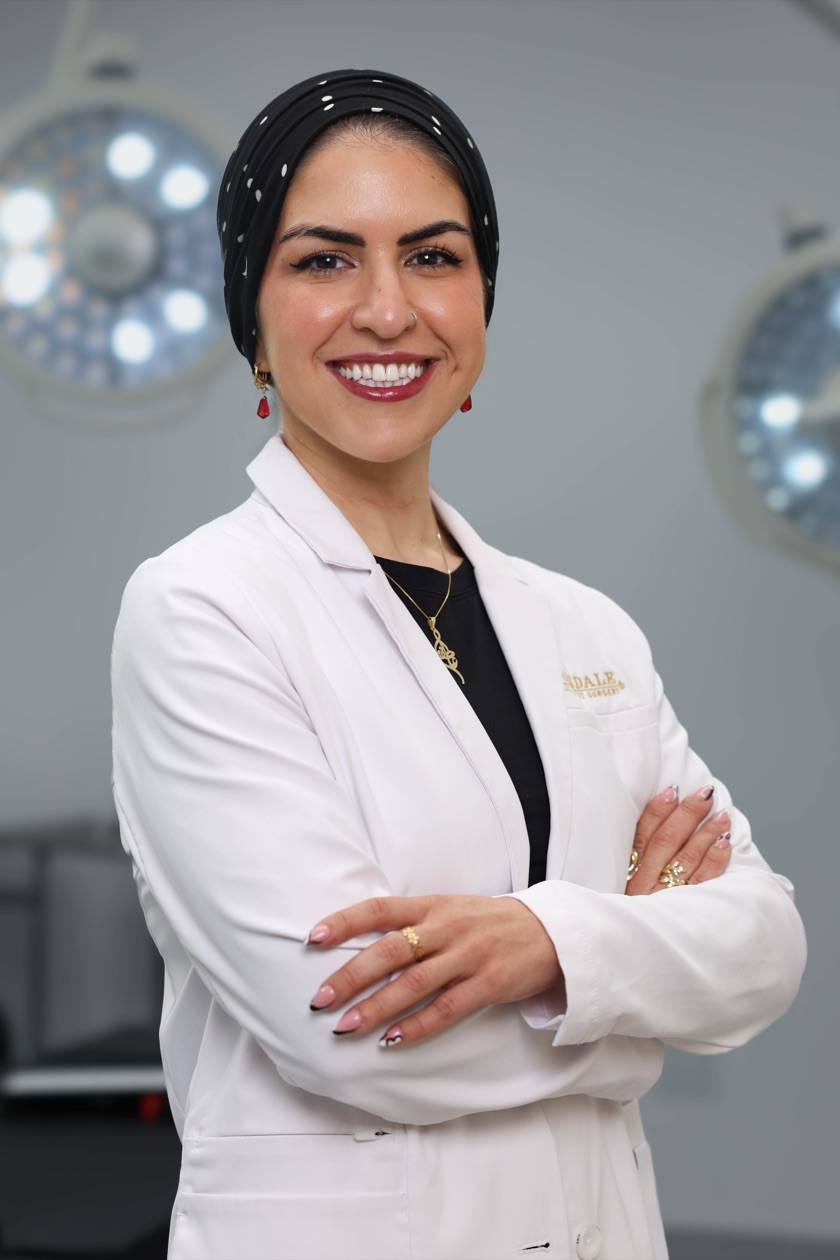
This procedure is performed by Dr. Truesdale or his hand-picked associate Dr. Sajjadi — discuss the right path on your free Surgery Discovery Call.
Schedule your deep plane facelift consultation
An unhurried conversation with Dr. Truesdale himself — your anatomy, your goals, your questions answered. Dr. Truesdale personally conducts every consultation. We respond same-day, Monday-Friday.
Book a Surgical Discovery Call online
After clicking the booking link, select “new patient” under Schedule Your Appointment and fill out the form to see our current availability for a Surgical Discovery Call with a Patient Care Coordinator and book immediately. Call us (424) 363-4112 for additional appointment times and information.All times are based on Los Angeles, Pacific Time (PT).
Book Discovery Call →Prefer to share details first? Submit the form and a Patient Care Coordinator will reach out the same business day (Monday–Friday).